Lianne Sanderson for Queenballers: If my story helps one person, I will be happy
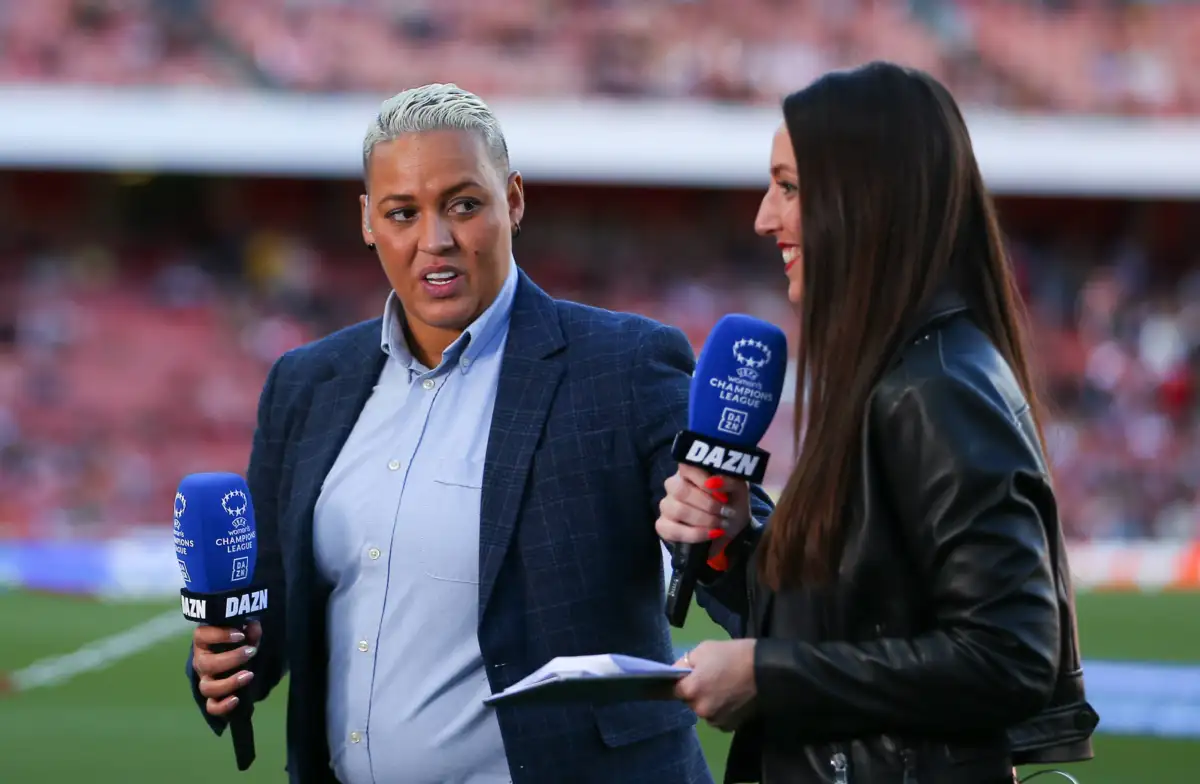
Football legend Lianne Sanderson, now a commentator for the UEFA Women’s Champions League on Disney+, spoke to Queenballers about her journey, the rise of women’s football into a fully professional sport, and the team that has surprised her most in the Champions League.
Autor: Kristina Němcová
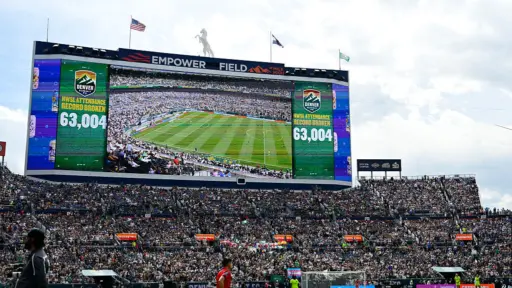
Lianne, a few days ago the Lionesses played their last game of the year. There were more than 75,000 people at Wembley, which is incredible. Could you have imagined that women’s football would be so popular during your active career?
No, because it wasn’t. We played at Wembley and got 16,000 people there, but that was once every few years, and it was seen as a massive deal. And it is a massive deal to play at Wembley.
But I think what we see now is the Lionesses selling out the stadium within ten minutes of tickets going on sale. They no longer have to give tickets away for free or charge people a pound or a euro to come to the game. People are willing to pay for the product that’s in front of them. And TV and radio companies are also buying into the product. That’s great to see.
Women’s football is on the rise. We see that, for example, with brand-new coverage of the Champions League on Disney+ or the creation of the Queenballers platform. How does it feel to be part of this rise?
It’s amazing to be part of this rise — and Disney+ as well, because I love it. I have several Disney-themed tattoos. To have every single game streamed on television is a dream come true. I can watch the game back and watch the highlights. The fact that every single game has two people going to the studio is brilliant.
And we’ve waited for this moment for ages. Disney+ came along and did it, and I am really grateful to be part of it.
Watch UEFA Women’s Champions League Matchday 6 live on Disney+ this 17 December, with expert analysis as all nine games kick off together.
To me, the most important part is that the sports commentary is in the language of every team that participates. For example, we have Dutch commentators for Twente games. I think it’s amazing and really important.
It’s a game-changer, really. Everybody can see the games, which are broadcast in many different languages.
We’re talking before the sixth round of the Champions League, which will be broadcast on December 17 on Disney+. Who is your dark horse in the competition so far?
I’m not surprised by Lyon and Barcelona, obviously. They are consistently so good every single year. But if you ask about the team that surprised me, it’s Manchester United. Apart from losing to Wolfsburg and Lyon, they’ve been amazing. They had the chance to be the only English team that automatically qualified for the next round. They had a really good start. Now they have Juventus to play again, which is a difficult challenge, and Lyon was difficult as well. But they are doing amazingly.
I didn’t expect them to be in such a good position, especially as it’s their first time in the competition.
But I believe in Chelsea. To me, they have to win this year. I’m not saying they will, but they have to. They have new players like Alyssa Thompson and Ellie Carpenter, along with the quality players they already have. Naomi Girma, to me, is the best defender in the world, and she is back from injury. She can finally show us what she can really do.
It's Chelsea's turn now
Do you believe Chelsea can beat Wolfsburg? They put in a great performance against Barcelona.
It depends on how they recover from losing their first game in the WSL. If you look at this Chelsea team, they have the quality, and they should have been the team that beat Wolfsburg.
But Wolfsburg also have a squad full of top players, and they are doing well this year. Everyone expects them to automatically qualify for the top four. But they have a very young team now and are in transition. They’ve done better than people expected, especially for a team with many newcomers.
You played football with boys during your childhood. After the Lionesses’ success in 2022, did girls’ football clubs start popping up all over England. Is this just the beginning of the growth of women’s football?
Visibility is everything. During the Euros in 2022, the whole country stood behind the Lionesses. Now we saw it in Switzerland — amazing atmosphere, sold-out stadiums. I know how much impact it can have.
Now it’s similar in England. Young girls and even boys have Alessia Russo jerseys — that’s something I never saw when I was playing. Men walking down the street in Lionesses jerseys. The impact they have on England is undoubtedly amazing. A lot of credit has to go to TV and radio companies that invest financially so people who can’t be there can still see the games.
People are now talking about which teams they like or which players they like. This broadcasting is making a bigger impact than just looking at your phone to check the score. People are more committed to the teams and players they support. The growth is happening.
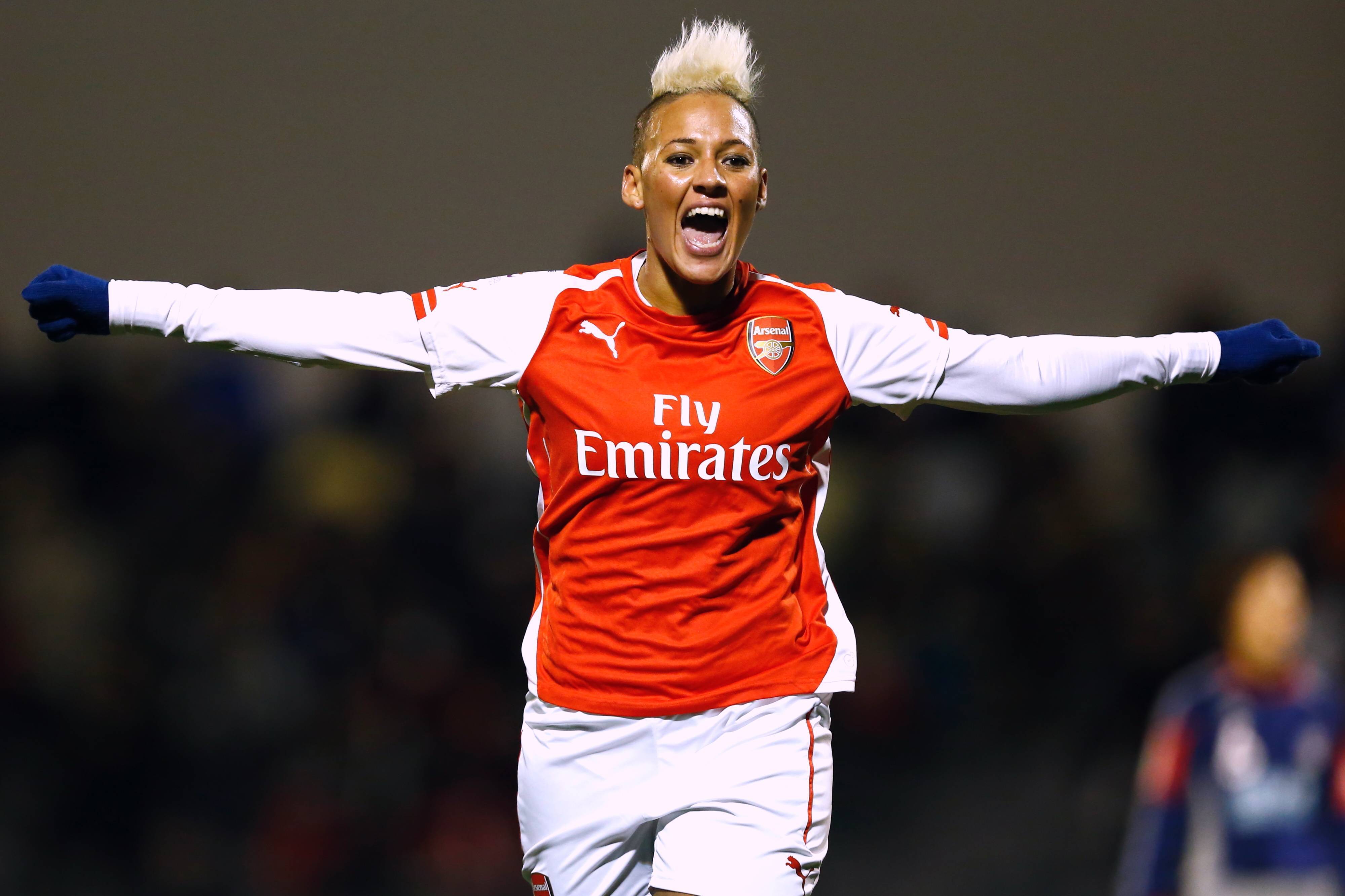 Sanderson during her active career (Source: IMAGO / AFLOSPORT)
But we’re talking about England, where football is already a popular sport. How can we help women’s football in countries where it isn’t experiencing such a boom yet?
When you come across the game, it’s football. If you love football, you love any football. Some people come across the game on television and think, “Oh, I’ve never seen this before — let me watch it.” And then they tell others: “Have you watched this?” Everyone starts talking about how good women’s football is.
That’s what’s happening in England, and I think it’s a domino effect. But the investment has to come from the Football Association. For example, the Lionesses always had a good team, but now they’ve become a great team because the players are fully professional.
When I was playing in the European Championship final in 2009 against Germany, we weren’t professional yet, even though we thought like professionals.
Everybody in the Lionesses squad is now fully professional. We couldn’t compete with Germany or the USA before. Now look at us. So the investment had to come from the football association — they had to invest in the country.
We’ve seen it in Switzerland. They are not typically a football country, but now more girls are getting into football, academies and youth clubs are starting to invest in them. People now see that girls can play football — and girls do play football.
The GOAT? Marta, without question
What was it like growing up? Did you miss having female role models in football?
Yeah, my role model growing up was David Beckham. I also loved the Williams sisters. They were the only women I saw in sport. They were the only role models I could look up to, and they played tennis.
Later, I used to go to games. I loved Rachel Yankey. Later we played together, and she became a friend of mine. Back then, there weren’t many role models to look up to, so I had to look up to men.
Young girls and boys these days can see the Lionesses, can see the European Championship, can watch games on Disney+ and see the players. Some of these players are good, but people might never have heard of them before. Now people can make their own judgement about the players they like.
The visibility women’s football has now is healing my inner child. When I was growing up in Czechia, I didn’t see any women playing football. Only once did I see Marta in a magazine. Knowing players like Leah Williamson or Alessia Russo back then would have helped me a lot.
Marta, for me, is the greatest player I have ever played against. She is the GOAT for me, without question. As players, we always had the responsibility to be role models — that comes with becoming a professional female footballer.
In the men’s game, I don’t think men are expected to be role models. In the women’s game, there is more pressure. It’s not for everybody, but I think the Lionesses have realised the impact they can have on the next generation.
What my generation brought
The last time I was in England, I was at the Arsenal match against Brighton. There were many more families with children than I see at men’s games. Many children had banners supporting their favourites. Chloe Kelly is undoubtedly the most popular player among them.
It’s a more family-friendly environment. I think lots of people take their children to a women’s game as their first-ever football match.
I see your generation as pioneers of women’s football. Do you see it that way too?
I feel blessed because I became a professional footballer during my career. I always thought like a professional. My generation won the Champions League with Arsenal in 2007, and to this day, Arsenal are the only English team to have done it.
I’m really proud of that, and I know Arsenal fans love us for it. I felt very respected by the club and the fans. Once again, it shows the importance of role models — if you can see them, you believe you can become one of them. If I can help even one person who wants to become, for example, a commentator, I’ll be really happy.
What was the journey to becoming fully professional like?
People in senior positions pushed for us. We went to the World Cup and the Euros, and we got contracts. Now players can also get maternity leave, and they don’t have to retire when they get pregnant. There are many new factors that we brought into the game.