Autor: Kristina Němcová (@stinanemcova)
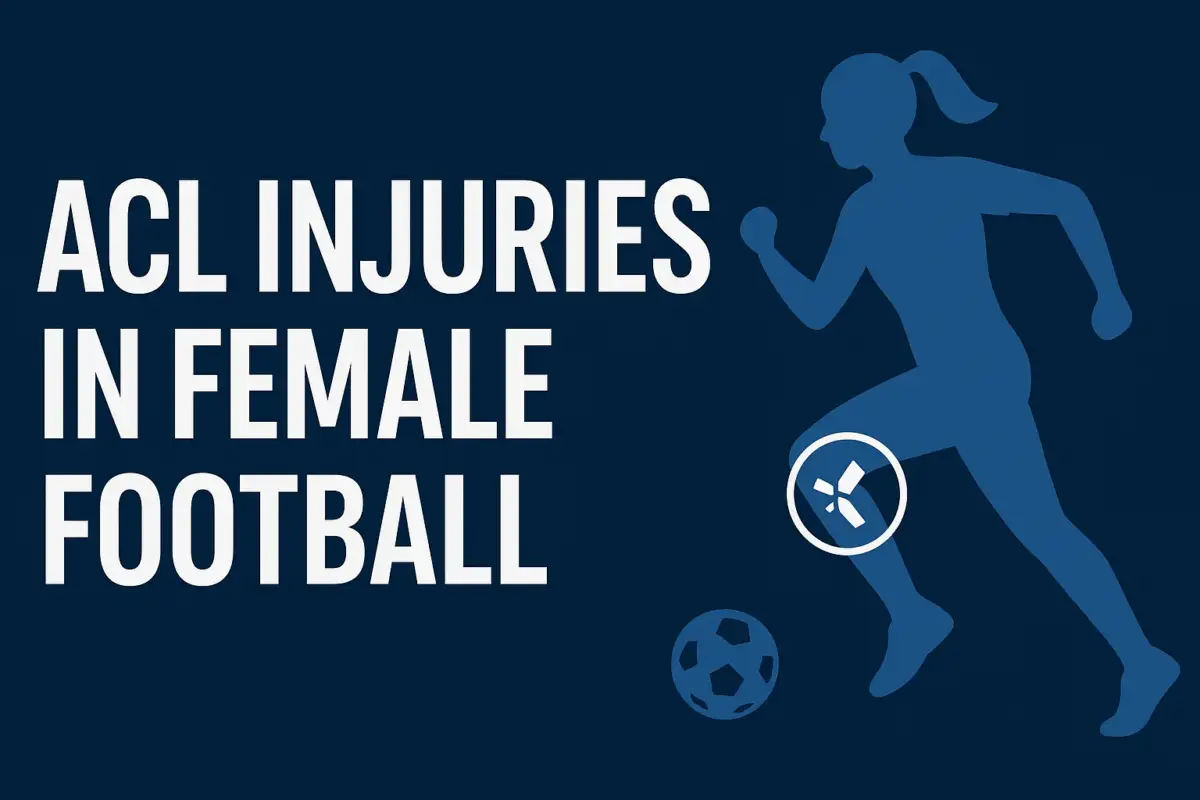
For every athlete, an ACL (anterior cruciate ligament injury) injury is a nightmare. It takes away at least a year of your career. Chelsea knows this all too well, as one of their biggest stars, Sam Kerr, was sidelined for nearly 20 months due to injury. Manchester City is also missing Australian star Mary Fowler.
During the 2025/26 season, ACL injuries began to spread so much that people started talking about an ACL crisis. It even affected England's heroine of the 2025 Euros, Michelle Agyemang, who was injured during a friendly match between England and Australia. In Arsenal, they lost young key player (who replaced Leah Williason, who is also sidelined with knee injury) Katie Reid and goalkeeper Manuela Zinsberger due to ACL injuries.
A separate article could be written about the story of Lena Oberdorf from Bayern Munich. A great young talent. An injury took away almost the entire 2024/25 season from her. She had barely returned to the pitch, played a few matches, and then suffered an ACL injury again.
ACL injuries also occur in men’s sports, but they are more common in women’s sports. In addition to female footballers, they also affect female basketball players, tennis players, and baseball players. Why is this the case? Previous research suggests that the menstrual cycle could have an impact on this.
The International Federation of Association Football (FIFA) has announced its decision to fund a study investigating whether hormonal fluctuations during the menstrual cycle may play a role in the higher incidence of anterior cruciate ligament (ACL) injuries in women’s football. Previous studies indicate that female footballers are up to six times more likely to experience this serious injury compared to their male counterparts.
The research, spearheaded by Kingston University in London, started in May 2025 and is expected to continue for around a year.
'We want to find out whether female athletes might be more prone to injuries due to functional changes in anatomy and physiology during the menstrual cycle,' said Simon Augustus, a senior lecturer in sports biomechanics, to the BBC.
According to current research, hormones in the female body fluctuate during different phases of the menstrual cycle. The scientific team now plans to determine how much of an impact this may have on injury susceptibility.
The study will involve players from London clubs, including Fulham, who play in a lower league, as well as some players from amateur clubs. As part of the research, the footballers will regularly have their blood and physical performance tested.
The research will track hormone concentrations throughout the menstrual cycle, particularly estrogen and progesterone, which, according to previous studies, could be related to increased ligament laxity and a shortened neuromuscular reaction time.
The scientists aim to reach a conclusion through the analysis of situations that typically lead to ACL injuries, such as rapid changes in direction or landing after kicking the ball, to determine whether there is indeed a connection with hormone levels.
'Some injuries are unavoidable, but we are trying to help those players who don’t injure their ACL during contact with an opponent. It is with these players that we might have a better chance of preventing injuries through strength training or adjusting technique,' said Augustus.
Many different factors are associated with ACL injuries. We focus on the individual, examining the entire profile of the athlete, and try to identify steps that can reduce the risk of injury," adds Augustus.
The research at Kingston University in London will build on findings from researchers at University College London from last year, who discovered that female footballers are more likely to get injured during certain phases of the menstrual cycle.
In a peer-reviewed study, it was found that 26 footballers had six times higher likelihood of a muscle injury during premenstrual syndrome days than during their period.