For Her Mum: How Esperanza Pizarro Found Strength in Football
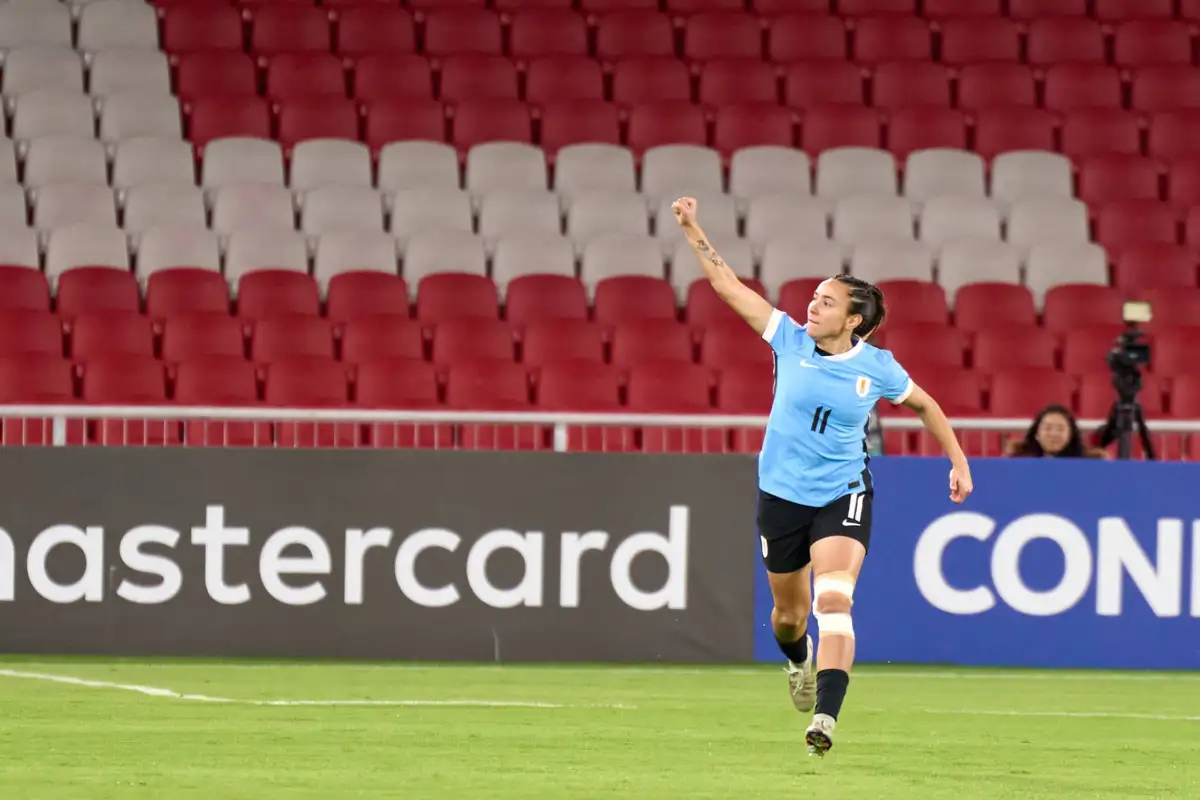
Today, Esperanza Pizarro is one of the standout names in Uruguayan women’s football and a key presence at Eibar in Spain’s Liga F, where she has played since 2023. But her journey could easily have taken a very different turn.
The energetic forward once stood on the brink of leaving the football behind. Struck by personal tragedy at a young age, she questioned whether football still had a place in her life and seriously considered pursuing another path altogether.
But back to the beginning. Esperanza was born in 2001 in the small town of Nueva Palmira, Uruguay, and dreamed of football from an early age. She recalls that as a child she wanted to be everything — until the day she discovered football and said to herself: “This is what I want to do.”
Her mother took her to training sessions even though there was no girls’ team in the area. Instead, young Esperanza learned the game alongside boys, dribbling past tougher opponents and developing the resilience that would later define her.
And the hard work paid off. In 2018, she featured at the FIFA U-17 Women’s World Cup and scored that goal — one of the standout strikes of the tournament. It was a moment that opened the door to a wider footballing world, and her mother was there in the stands, cheering her on.
No bigger pain
For Esperanza, it was more than just a goal. It was a joy she was able to share with the person who had always believed in her the most.
There is no bigger pain than losing a parent — especially when it happens suddenly and far too soon. In February 2020, just days before she was due to join Uruguay’s U-20 national team for the South American Women’s U-20 Championship, Esperanza received the news that changed everything: her mother had died in a car accident.
The shock brought her to her knees. Esperanza later admitted she no longer wanted to play football, or travel — or do anything at all. The game she had loved so deeply suddenly felt empty. It was a world without her mother — the one who had taken her to training, cheered from the stands and been her unwavering support.
Had she been alone, perhaps the dream would have ended there. But she wasn’t
Her sisters held her close, urging her not to forget the sacrifices their mother had made — the long bus rides to training, the sessions in pouring rain and scorching heat, the quiet, constant belief. And her team-mates? They gave her the space to be vulnerable. They listened. They sent messages. They kept asking, “How are you?” — even long after she had returned to training.
And so she returned — not merely as a participant, but as the forward driving her team on.
At the tournament in Argentina, she scored seven goals and helped Uruguay secure a historic place in the finals. She finished as the top scorer of the group stage.
But her story was about more than numbers. It was about the courage to face unimaginable pain, to carry grief and transform it into the strength to keep moving forward — on the pitch and beyond it.