The Hidden Opponent: Endometriosis in Women’s Football
March is Endometriosis Awareness Month, a condition that is frequently discussed in the world of women’s football. Many footballers who suffer from this disease are very open about it, sharing their experiences. What is it like to live with such a painful condition while also being a professional athlete, where your body is expected to perform at its peak?
This subject has gained more attention as players speak out about the challenges of balancing the demands of elite sports with the intense physical discomfort of endometriosis. Their courage in sharing their stories is raising awareness and helping to break down the stigma surrounding the condition.
So what exactly is endometriosis?
Due to medicine’s long history of overlooking women and their specific health issues, endometriosis remains a significantly underdiagnosed condition for many women. It is a gynecological disorder that, among other things, causes heavy periods accompanied by painful cramps.
Endometriosis can have a significant impact on the careers of female athletes. For sportswomen, it can mean limitations in training, slower recovery, or even an increased risk of injury. And not least, it can take a toll on mental health. This is a major challenge for professional athletes, especially when under the spotlight during international tournaments.
In addition to being overlooked by the medical field, endometriosis has often been downplayed not only by doctors but also by those around the affected women. Many were reassured that it was just common period pain, which led to them being hesitant to speak out about it or even consider seeing a doctor.
These footballers are breaking the silence on endometriosis – meet the heroes!
Women’s football has become a flagship in addressing this issue, as many footballers openly talk about it. As mentioned earlier, endometriosis affects not only the physical side but also the mental well-being, which already takes a toll in the high-pressure environment of professional sports.
Leah Williamson (England and Arsenal WFC)
Who better to serve as an ambassador than England’s captain and Gooners’ favourite Leah Williamson?
At just 25 years old, you’re leading England to their first-ever UEFA Women’s Euro title, on home soil, in front of a packed Wembley Stadium. Now, imagine doing all of that while dealing with menstruation and suffering from endometriosis. That was the reality for Leah Williamson, who, after the groundbreaking Euro 2022 victory, spoke out about the struggles that had plagued her throughout her career.
To make matters worse, she had also suffered a concussion shortly before the tournament, which only intensified her painful menstrual cramps.
"The whole tournament, I was terrified that instead of being on the pitch, I would be curled up in pain in the bathroom. There were times when I was just lying there, unable to move, and it was too late to take any painkillers," she confessed to Women's Health after winning the European Championship.
Her openness has made her an even more powerful figure in the fight for awareness, shining a light on the challenges female athletes face.
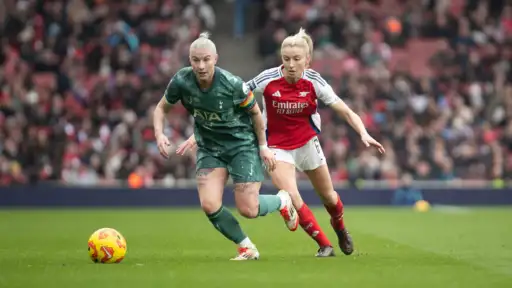
Bethany England (Tottenham Hotspurs)
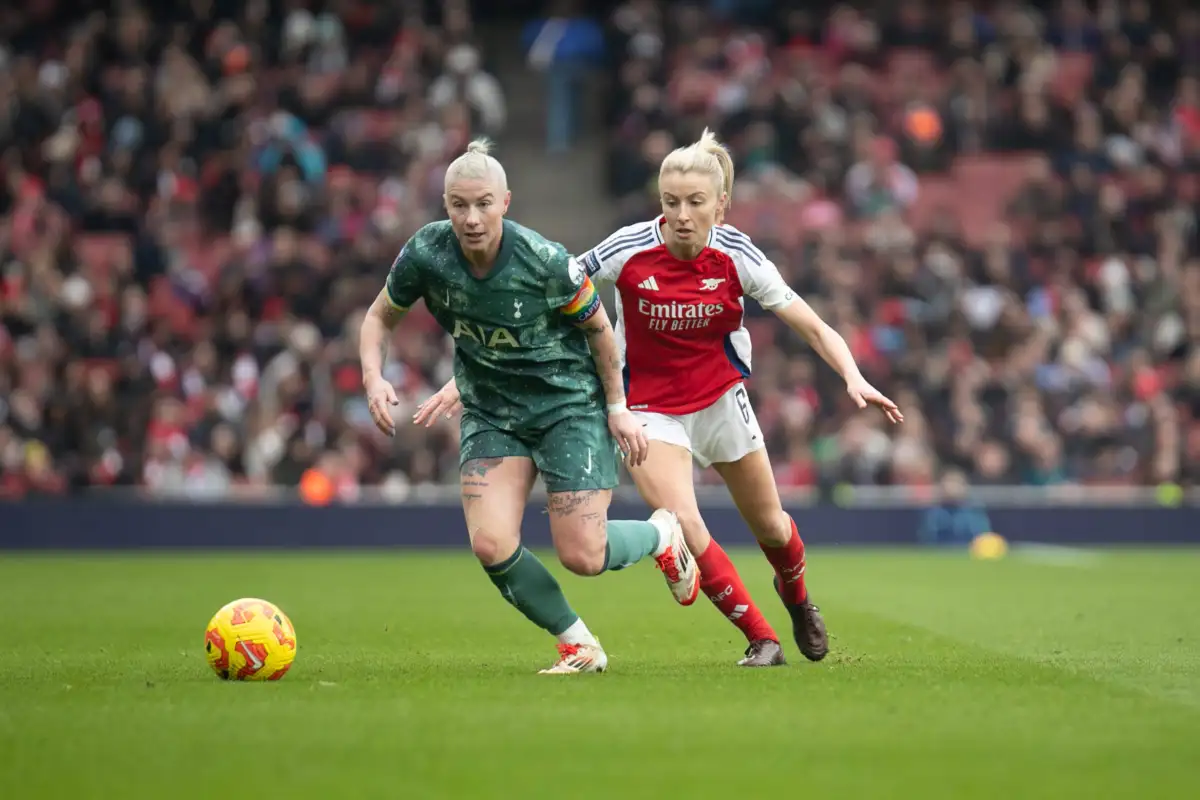
From Arsenal straight to their North London rivals Tottenham. What football rivalry divides, the fight for women’s health unites. Spurs captain Bethany England also suffers from endometriosis.
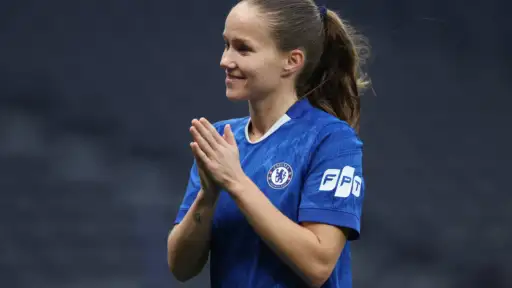
As mentioned earlier, endometriosis is often underdiagnosed and it can take years before women receive the correct diagnosis. That was exactly the case for England, who waited eight years to understand the cause of her severe pain. During that time she experienced episodes such as fainting in a supermarket and spending long hours curled up around a hot water bottle — hardly something that sounds like “normal period pain.”
Fortunately, England was playing for Chelsea at the time, and the club decided to take her situation seriously, insisting she undergo proper examinations with specialists. That was when she finally discovered the reason why her body had been letting her down for so long.
Like Williamson, England chose to speak openly about her condition. She knows very well that she is far from the only one dealing with pain month after month that makes normal life — let alone professional sport — extremely difficult.
Emma Hayes (ex Chelsea, now USWNT manager)
Raising awareness is not limited to active players — coaches are part of the conversation too. Earlier we mentioned that Bethany England’s diagnosis was helped by the support she received from her club. At the time, Chelsea were led by Emma Hayes.
Hayes herself has personal experience with the condition. During her time in the WSL she had to take a short break from coaching to recover from an emergency hysterectomy — a surgical procedure to remove the womb, which can also involve removing tissue that causes endometrial pain. It is one of the treatments used in severe cases of the disease.
Because of this experience, Hayes became one of the early voices advocating for greater awareness of endometriosis. She herself had waited several years before finally receiving a diagnosis.
Tuva Hansen (Norway and West Ham United)
Staying in England, but this time with a Norwegian international who now represents West Ham. Tuva Hansen has also been very open about living with endometriosis, particularly on her TikTok, where she has shared personal insights — including moments from a recent surgery.
Hansen has suffered from endometriosis since her very first period. At sixteen she was advised to begin hormone therapy, which brought some relief but was far from a complete solution. Later, she was even told that having a child as soon as possible might ease the pain — a theory that has since been widely debunked by medical experts and, once again, reflected how late her endometriosis diagnosis came.
Despite the challenges the condition brings, Hansen approaches her diagnosis with humour. In a recent TikTok, she joked that while there may be no cure for endometriosis, women who have it are apparently more attractive.
Tameka Yallop (Australia and Brisbane Roar)
From England, we move to Australia. Brisbane Roar and Matildas player Tameka Yallop has also recently spoken openly about the condition that has made her life more difficult. Despite living with endometriosis, she has managed to build a very successful career.
The now 34-year-old Australian struggled particularly during the home Women’s World Cup in 2023, when she was performing in front of thousands of fans and expected to deliver at the highest level despite severe pain and the mental strain that came with it.
According to Yallop, the operation she underwent as part of her treatment completely changed her life. For her, speaking openly about endometriosis is extremely important. A delayed or missed diagnosis can sometimes be the reason why young girls decide to give up professional sport — which would be a real loss.
Yallop, a highly respected athlete in Australia, is also an ambassador for Endometriosis Australia, an initiative that raises awareness of the condition, particularly among athletes. As the stories above show, that awareness is badly needed — and everyone benefits from it.
March is Endometriosis Awareness Month, symbolised by the yellow ribbon. Let’s share our stories and help raise awareness of a condition that is still too often overlooked.
Hot news