U20 WWC Stars: Noa Jiménez: Turning her glasses into a symbol of pride
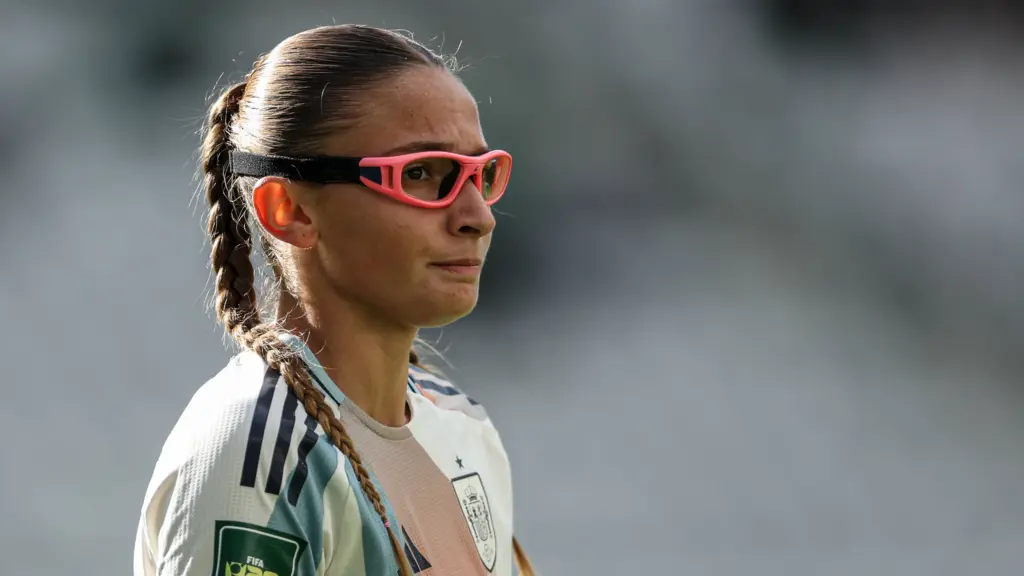
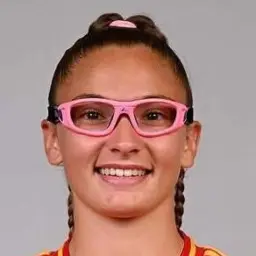
At just 18, Noa Jiménez is already becoming a recognisable figure among the next generation of Spanish women’s footballers. You probably remember her for her iconic pink glasses. But what's the story behind them?
The Catalan defender was born in Badalona, near Barcelona, and joined FC Barcelona at a young age. At nine, Jiménez entered the club’s seven-a-side setup and began working her way through Barça’s youth system.
Her progress was rapid. At times, she represented two age groups simultaneously before eventually establishing herself with Barcelona B during the 2025/26 season.
But beyond her talent on the pitch, there is something else that immediately makes Jiménez stand out: the glasses she has worn while playing football since childhood. And over the years, they have become much more than a necessity.
The story behind Noa’s pink glasses
Jiménez began wearing glasses in everyday life at the age of five because of her short-sightedness. A year later, when she started playing football, she began using special glasses designed specifically for sport. What started as something she needed to be able to play gradually became part of her identity and a way for her mother to recognise her on the pitch.
“Now, if I’m not wearing my glasses, that’s when I feel a bit odd,” Jiménez told FIFA’s official media during the U-20 Women’s World Cup in Poland.
The glasses she wears are approved for use in sport and made from a material designed to prevent them from breaking if they are hit by the ball or during a collision.
Probably their most distinctive feature is their colour. They are bright fuchsia pink.
Jiménez has worn the colour since she started playing football, and there is a very personal reason behind the choice.
“Fuchsia is one of the colours my mom can distinguish best. She has low vision and you could say she sees as if she were in a tunnel. She can only see light or dark colours. The fact that I wear them in this colour means that, if I’m not too far away, she can see me apart from the rest of my teammates,” she explained.
When Jiménez is playing too far away for her mother to follow what is happening, her father steps in, describing the action on the pitch and telling her how their daughter is playing.
Turning what makes you different into a strength
For Jiménez, however, the glasses have grown into something bigger than a practical solution.
Despite her young age, she has already used her visibility as a footballer to encourage others to embrace the things that make them different.
“It doesn’t matter how difficult things are or what makes you different. We must make it part of who you are and wear it with pride, whether it’s glasses, a prosthetic limb or a wheelchair. There are sports for everyone, and you just have to work hard and enjoy what you do,” she told FIFA.
It is a message Jiménez has carried with her throughout her development. Rather than trying to hide the feature that makes her instantly recognisable on the pitch, she has turned it into part of her identity.
Dreaming of Barça’s first team
Now, Jiménez is getting closer to achieving another childhood ambition. The defender has already trained with Barcelona’s senior squad, bringing her one step closer to making her first-team debut.
“Ever since I was little, I’ve always dreamt of playing for Barça’s first team and making it into the Spanish senior national team. I’m working hard to make that happen,” she told FIFA.
For now, the 18-year-old continues her development at Barcelona, hoping to follow the pathway from the club’s academy to the senior side.
It is a journey that has already taken her from Barça’s seven-a-side teams to Barcelona B and the Spanish youth national setup. The ultimate goals remain the first team and the senior Spain squad.
But whatever comes next, the bright pink glasses are unlikely to disappear. What began as something Jiménez needed simply to play football has become part of who she is. A way for her mother to find her on the pitch, a trademark recognised by those watching from the stands and, increasingly, a
In This Story
The players this piece is about.