

Exclusive: Patricia Gregory reflects on England’s first women’s team and the rise of the Lionesses
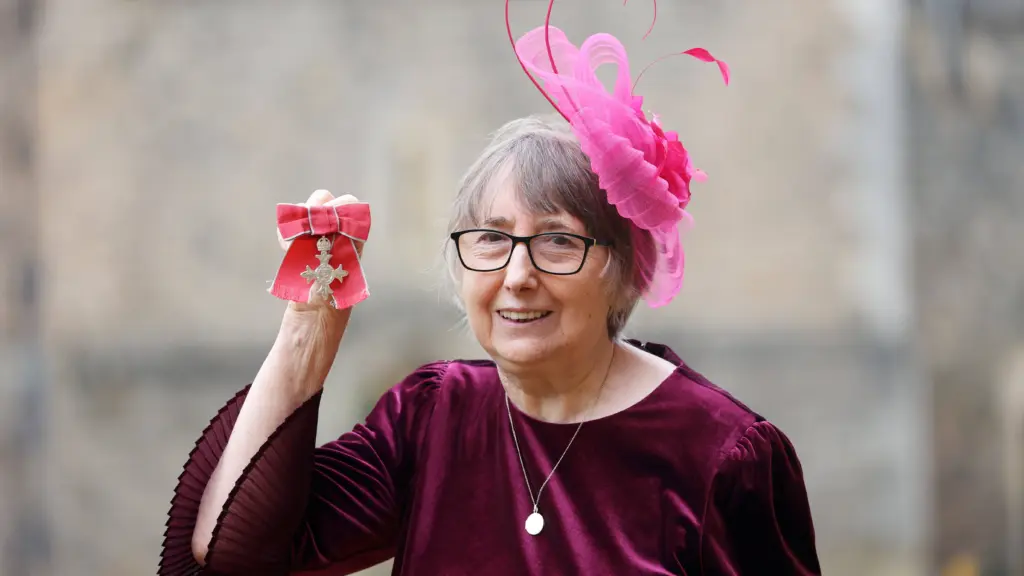
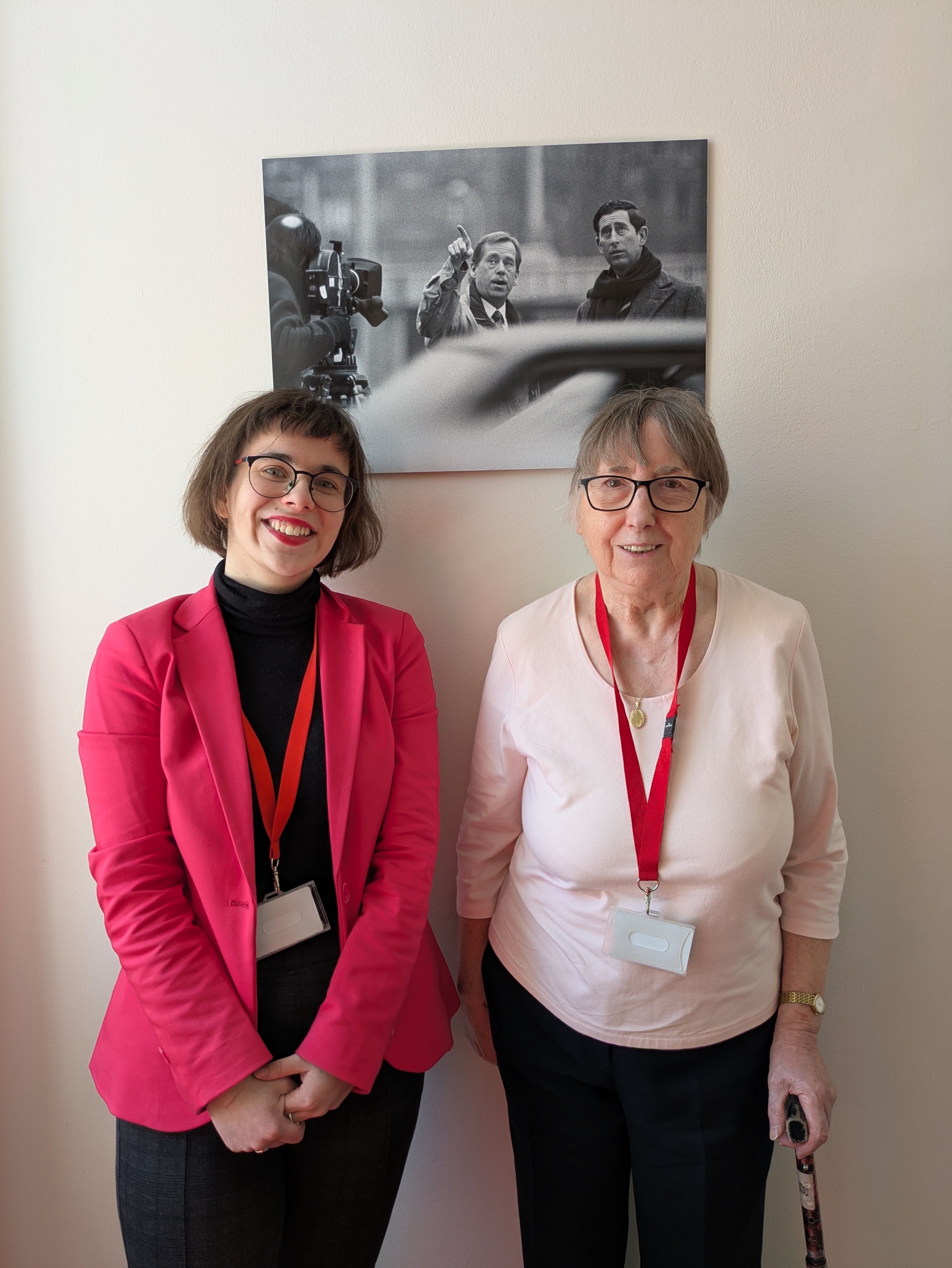
“We were just girls who wanted to play football," said in exclusive interview for Queenballers Patricia Gregory, the founder of women's FA and mother of the women's football. During her last visit to Prague, she spoke about how she fought in the late 1960s for women to be allowed to play football and what it means to her today to see a packed Wembley.
The Lionesses recently played their 500th match. They are two-time European champions. How does that sound to you?
Incredible. I was at the very first England game, or the one we call official, because even in the 1800s there were women’s teams calling themselves England, but they weren’t official. The first official England team was formed in 1971.
We arranged the first match. It took place on 18 November 1972, and it was in Scotland because we were poor and couldn’t afford to travel anywhere. And we didn’t know any other national sides. So the very first match was Scotland vs. England.
I organized the English side, and my Scottish counterpart, Elsie Cook, organized the Scottish side. And then it culminated at the end of April 2026 with the 500th game. I was present at Wembley for England vs. Spain, which was the 499th. I did not travel to Reykjavik for the 500th one.
You were the very very first and now we have the 500th. The last Lionesses game hosted in England was played on the packed Wembley. Reigning European Champions versus reigning World Champions. What was the feeling?
It’s always exciting to go to Wembley. I like the feeling when I come out of the underground station and face the stadium. You see the hundreds or thousands of people walking up to Wembley to go to the match, and that’s always special. Back at the first game, we had maybe 200 people. And then to go into Wembley and see the tens of thousands.
Speaking of Wembley, let’s skip back to July 31, 2022. What was going through your mind after the final whistle? The Lionesses are European champions at a sold out Wembley.
I was there, not only for the final. I went to the opening game at Old Trafford, and when they played the national anthem, I cried.
And at the final, I was with my great-nephew. He was only 24 back then, such a young man. And he finds it very difficult to understand where we could have been. Women were prevented from playing, he does not understand this. But we both enjoyed the match. And when the Lionesses won, I think I cried again.
It was a special moment. They had come so far, certainly in my lifetime, but also in the period since we formed the Women’s FA in the late 1960s.
Is this moment a milestone for you in any way?
I suppose it was a turning point. In the UK, we have a morning radio show called Today. It’s very famous and has been around forever. I was there as a guest on the Thursday before the final. And I remember saying to the interviewer that I thought the women would bring the trophy home to England before the men. And so it happened.
That’s the biggest thing to take away from 2022. Where the men have failed since 1966, the women have done it twice. I think it helped cement how the FA, which is the governing body, feels about women playing football, very different from the 1960s, when they were not supportive of it. It brought football glory to England. And then they did it again last summer, in 2025.
And what are your memories of the 2023 World Cup, where the Lionesses reached the final?
That was something special. I visited Australia and New Zealand before the 2023 World Cup, and I was interviewed on New Zealand radio. I said that I didn’t think the host countries would do very well in the tournament, and they didn’t.
I was expecting England to get to the World Cup final, but I’d rather hoped they would win. And of course, they didn’t. Spain won.
I believe they can take it back next year in Brazil.
I don’t share your optimism. They will do well but I am not convinced they will win.
Let’s see. England wasn’t the favorite in the Euro final as well. Especially after their loss to France in the opening match. But they made it.
Mentality is their greatest strength. They don’t give up. They carry on until they get the result they want. I think that has to be put down to the manager, Sarina Wiegman, who has instilled in them this belief. I think they will do better than the England men this summer, but let’s see.
Safe space for families
How special is today’s generation? You mentioned that you went to Wembley and met lot’s of fans in jerseys with women’s names. Players like Leah Williamson, Alessia Russo or Chloe Kelly are very popular and fans love them. They are role models to many children because they are visible.
That’s lovely for me. I go to Arsenal Women’s matches. They play in the main stadium, and it’s quite near where I live. You see the crowd there, probably 40,000 people, which is unbelievable in my terms.
But what I like most, and this is true of women’s football, is that I have seen it at Wembley and at every Women’s Super League match I’ve gone to: there are so many families with children. And I think there are several important elements to that.
One is that they can afford it. Prices for men’s games are horrendous. And two, it is a safe environment. It’s just a lovely atmosphere for children to learn about football.
Yeah. And there are many role models for kids. I didn’t know any female footballers while growing up.
Back in my early years in the 1960s, my father used to go to Tottenham. Unlike today, Spurs were a very good side. He never wanted to take me to a match until I was 15 because he said there was no place for girls.
Now, especially at the women’s games, it’s different. And it’s so lovely for me to see when I travel to the match on the underground and see the little girls wearing their favourite players’ shirts.
But let’s go back to the beginning. You began your fight back in 1967, when you found it unacceptable that women couldn’t participate in the FA Cup. Could you describe what happened back then?
In 1967, we were playing men’s teams because we didn’t know any other women’s teams. I put an advert in a football magazine, and one of the respondents was Arthur Hobbs. He was running a competition for women’s teams in Kent. In 1967, there were only eight teams, but we were too late to enter that year.
But we went down on the train to a place called Deal and met other women’s teams for the first time. Later, we entered the 1968 competition and met even more teams.
Arthur later came up with the idea of forming a Women’s Football Association. Separately from that, we were forming leagues because you need regular competitive games. And these leagues were, of necessity, regional. That cut down the amount of time and money you had to spend travelling to the opposition.
Once we formed the FA and the leagues, we moved on. The first thing we did was form a national cup competition, and it still runs today.
How would you describe your then teammates? What kind of women were they?
I wouldn’t say women, they were girls. I recently went to Wembley for the England vs. Spain game, and the players from the very first England game in 1972 were there. They formed a guard of honour when the two teams came out.
To me, they are still girls, even though some of them are grandmothers now. But back in 1967, the youngest in my team was probably 14. We had no age structure. If I’d had an 11-year-old, I would probably have played her.
Most of them were like me. I was about 19. I don’t think anybody was older than me. They were just ordinary girls. The 14-year-old would have been in school, but the others did a variety of jobs.
Progress to be made
What was the reaction of their families?
My father didn’t approve of me or my sister playing football, but he didn’t stop us. My mother was more supportive. She washed our kits. Back then, we didn’t have our own kits. Just one set, and you had to keep it clean.
We weren’t able to let players keep their shirts because we had only one set. We had no money, so we had to survive in the best way possible.
I remember the Czech national team playing against Croatia last season and the Croatian players didn’t have their names on their back. Czech players did but it’s not that long ago since they didn’t.
Most of Europe is still behind England or for example Sweden or Germany. There is still progress to be made.
Did you have any idea back then just how far women’s football could go?
In today’s terms, you would probably describe me as a feminist. But we didn’t call ourselves feminists back then. We were girls who wanted to play football, and we didn’t understand why men should say that we couldn’t.
Next challenge? Prevent injuries
That sounds feminist to me.
We were just trying to get the same opportunities. The Women’s FA ceased to exist because we had come as far as we could go, even without money. We had many months of discussion.
But now it’s 2026, and even though women’s football has come a long way, I still see a number of obstacles. I remember a situation where a mistake by Lyon’s goalkeeper, which led to an Arsenal goal, went viral online. At the time, the video was even shared by major accounts that don’t normally cover women’s football. A mistake that happens in men’s football as well served to humiliate the entire sport of women’s football. How can we fight this?
I don’t think you can. It will take the passage of time. It will take development over the years. Social media has a common problem across all subjects. It allows somebody to remain anonymous and be insulting. I hope society will grow out of that. When you really watch the games, you know the good aspects of them.
You began your fight in 1967. Yet as recently as 2009, the English women’s team played in the Euro final and were not professionals. For many national team players in other countries, this is still the reality. Women’s football has come a long way, but there is still a lot of work to be done. How can we help?
I can only speak from an English point of view. The amount of money that the men’s association, the FA, has poured into the women’s game is unrecognizable. I mean, we, the Women’s FA, handed it over in 1993. We were heavily in debt.
So we knew we needed to hand over the sport. I am saying that there has been a substantial input of really serious money. But I don’t think it is just a question of money. I see one danger in relation to women’s football.
It’s the incidence of serious injuries in the women’s game. ACL injuries seem to be very common in the women’s game. That’s a problem. I recently wrote an article, and I was posing the question of whether we need to rethink things.
What is the biggest challenge facing today’s generation of female gamers? A lot has already been achieved, but there is still a long way to go. In addition to what you mentioned, I also think of the various forms of sexism on social media and the sexualization of players in general.
I am not really on social media, so I don’t really know. But this is one thing I am doing to help with the visibility of women’s football. I recently did a project for the FA to make sure that individual England players have their own pages on Wikipedia, including the number of caps they earned for England and all their achievements.
I didn’t really answer your question, but I will stick to the injuries and the fact that we need more research. I am glad that Leah Williamson and Beth England speak publicly about endometriosis. Today, there is much more research on women’s bodies because of the visibility.