

From Niche Collectible to Global Phenomenon: The Story of Women's Football Sticker Albums

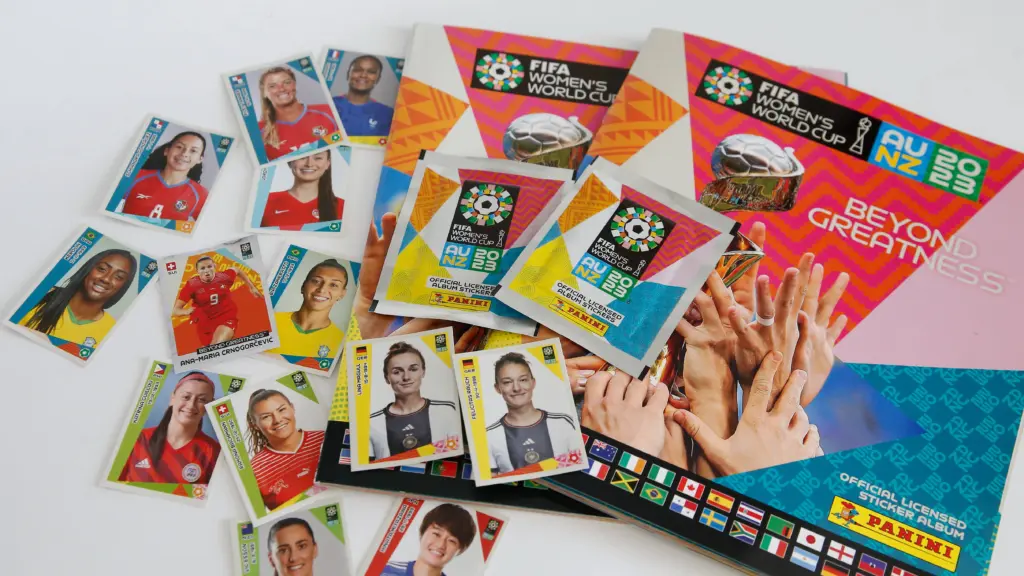
Major international tournaments and sticker albums have always gone hand in hand. What started as a fun for school kids, one that plenty of adults still enjoy, has, in recent years, become not only part of the atmosphere surrounding football's biggest competitions but also a thriving business, with collectors hoping to uncover the rarest stickers or trading cards. But what about women's football?
The difference? 41 years
The first sticker album for the men's FIFA World Cup was released in 1970, when Panini launched what would become a global phenomenon. Collecting stickers is now an inseparable part of every World Cup, entertaining children and adults alike. Beyond the collecting itself, swapping duplicate stickers helps build a sense of community and adds another layer to the tournament experience.
As with many aspects of women's football, collectible merchandise followed a slower path. The first official Panini sticker album for a Women's World Cup was not released until the 2011 tournament in Germany, which featured 16 national teams. Panini, then the official producer of FIFA tournament sticker albums, published its very first album dedicated to a women's competition.
Production numbers and distribution were, however, extremely limited. The album was sold exclusively in Germany. In 2011, women's football had not yet reached the global popularity it enjoys today, so from Panini's perspective, focusing solely on the host nation made commercial sense.
A Place in the Album (and the world)
Germany had long been one of the pioneers of women's football. The national team had competed in the inaugural FIFA Women's World Cup in 1991 and had won the title in both 2003 and 2007. Heading into a home tournament, Germany was aiming for an unprecedented third consecutive world title. There was hardly a better moment to introduce a sticker album dedicated to women's football, even if production numbers remained modest and distribution was limited to the German market.
The album contained 40 pages and a total of 335 stickers. Launching it worldwide would have been a considerable risk, so Panini instead used Germany as a testing ground to see whether a women's football sticker album could find an audience.
The experiment proved successful. Within just two weeks, 4.5 million sticker packs had been sold in Germany. Considering that women's football was still widely regarded as a niche sport at the time, those were impressive numbers. More importantly, Panini realised that women's tournaments could also become commercially viable products with significant room for future growth.
Looking back today, that first album has become one of the most valuable collector's items in women's football. Because the print run was so limited and distribution so geographically restricted, the 2011 album has become something of a holy grail for collectors. A complete unused album can now sell for anywhere between €300 and €800, while an unopened sticker pack may fetch around £50 online.
What about the UEFA Women's European Championship? Its first sticker album arrived much later. Unsurprisingly, the real breakthrough came with UEFA Women's EURO 2022 in England. The tournament marked a turning point in the modern history of women's football in many different ways, and collectible stickers were one of them.
However, EURO 2022 was not actually the first Women's European Championship to receive a sticker album. That honour belongs to UEFA Women's EURO 2017 in the Netherlands - another traditional football nation where women's football had already established a strong culture and history. Panini still held the licence at the time, but the company knew that even in the men's game, the European Championship generated less interest among collectors than the World Cup, so it took a more cautious approach.
The cover featured the slogan "The Continued Rise of Women's Football," perfectly capturing the moment. The market already recognised that women's football was growing, but companies were still testing how many people were willing to buy a dedicated sticker album.
The breaking point? You won't be suprised
Then came UEFA Women's EURO 2022, a tournament that fundamentally changed the sport. Sold-out stadiums, record-breaking attendances and a Wembley final watched by more than 87,000 spectators turned it into a cultural event as much as a sporting one. Commercial partners, including Panini, suddenly saw that there was a large enough audience willing to buy merchandise.
By the time the 2023 FIFA Women's World Cup arrived, the doors to the global market had effectively opened, much like they had long been for the men's tournament. Alongside the traditional team stickers, the album introduced two special Beyond the Greatness double-page spreads featuring glitter stickers of selected players from every nation. These premium additions had not existed in earlier editions. The album also expanded to 580 stickers and included all 32 participating teams. A significant increase compared with the 2011 edition.
The growth did not stop with international tournaments. In 2023, twelve years after the competition was founded, Panini concluded that women's club football had become a sufficiently strong market and launched the first official Barclays Women's Super League sticker album. The timing was no coincidence. At the 2023 Women's World Cup, WSL players represented the largest group from any domestic league, while the league itself continued to attract growing crowds and increasing global attention.
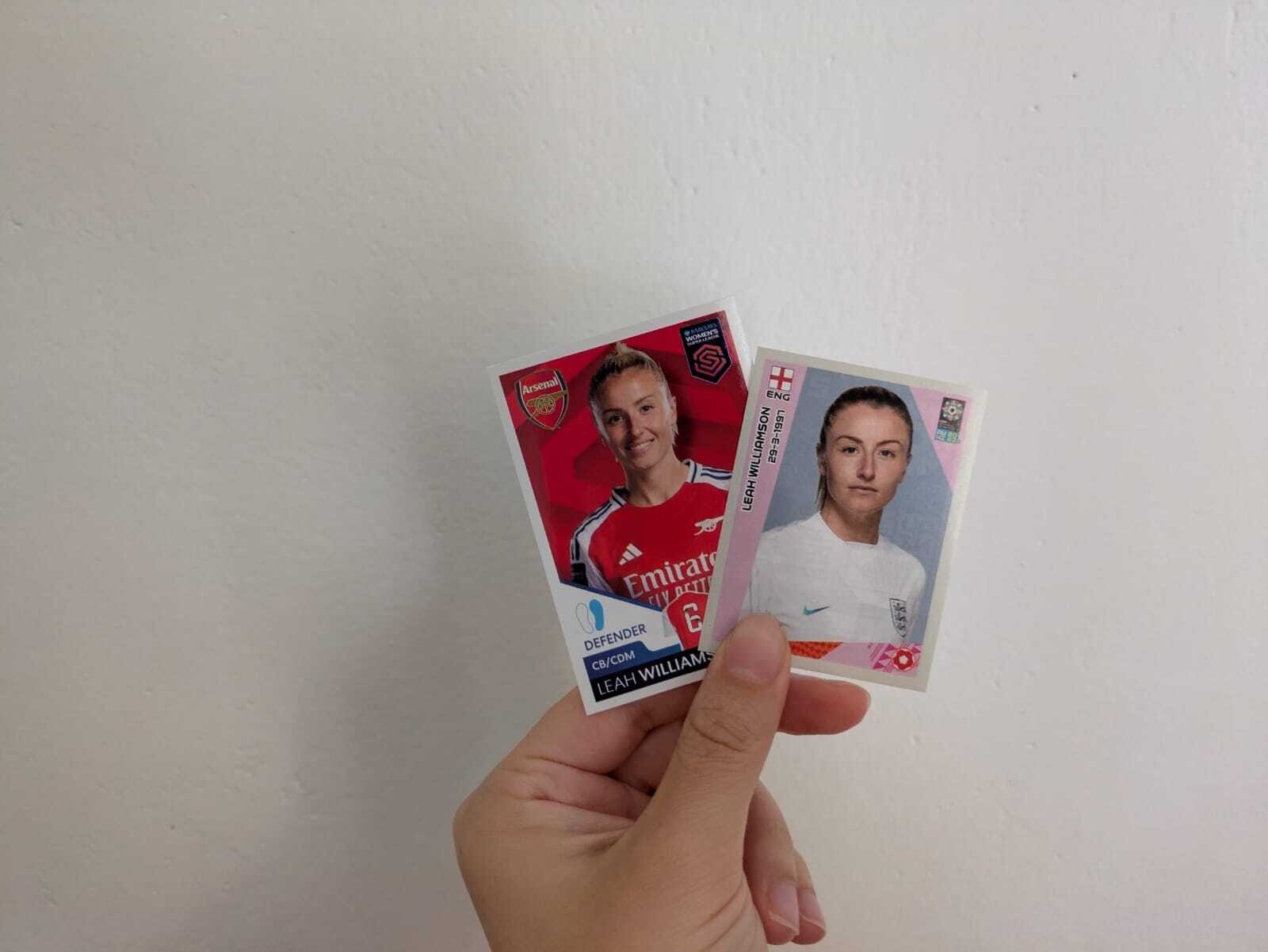
Then came UEFA Women's EURO 2025, building on the momentum of its predecessor. This tournament marked another first. Rather than Panini, the official sticker album was produced by Topps, which had successfully secured the licence. The move appears to have paid off. The stickers were available even in countries that had not qualified for the tournament, including the Czech Republic and Ireland.
The album featured 40 pages covering all 16 participating nations, alongside themed sections such as Shining Stars, Legends, Host Cities and One to Watch. With EURO 2025, Topps sought to establish a distinct identity for the women's tournament. Rather than focusing solely on squads, the album celebrated the history of the competition, highlighted legendary players and placed greater emphasis on individual stories. In many ways, that reflects how women's football is increasingly presented today, not simply as a sport, but as a culture and a community.
We do not yet know what the official sticker album for the 2027 FIFA Women's World Cup will look like, but one thing is certain. Although women's football entered the sticker album market more than four decades after the men's game, it is steadily closing the gap. The recently opened Foundys store in Manchester also aims to create a community space where collectors can meet and swap stickers. In many ways, that brings the hobby back to its original purpose: building communities. Even if the community surrounding women's football may look a little different from the one that grew around the men's game.