

Carolina Morace: The first lady of Italian football who never waited for a permission
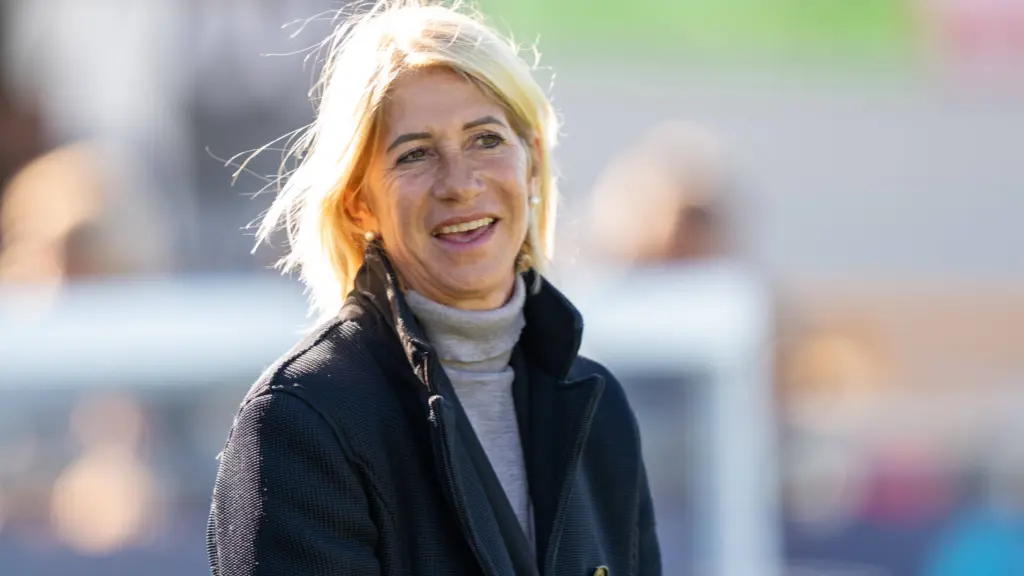
La Tigre. A nickname Carolina Morace earned thanks to her performances on the pitch. Her teammates said that during matches they could see the determination and ferocity of a killer in her eyes. She had displayed the same tenacity even as a little girl growing up in Venice. The daughter of a naval officer spent every afternoon with a ball at her feet, alongside her brother Davide, who is two years her senior.
Although she was the only girl amongst the boys, she never had to fight for her place. All she had to do was score goals. “I never had any trouble getting the boys to accept me. Probably because I was always one of the top scorers. Even though I was the only girl, everyone wanted me on their team,” Morace later recalled. It was there, on the small pitches of northern Italy, where the story began of a woman who, several decades later, became the first female footballer to be inducted into the Italian Football Hall of Fame.
The markswoman
Carolina made her senior football debut at the age of eleven, playing for third-tier side Ca’ Bianca. However, as the age limit only allowed players aged twelve and over to compete, she initially played using forged documents. Shortly afterwards, she moved to second-tier side Spinea and made her Women's Serie A debut at the age of fourteen, when she was spotted by Belluno. This marked the start of her colourful and record-breaking club career, during which she scored more than half a thousand goals, an truly unprecedented number.
Throughout her club career, Carolina frequently moved between Italian clubs, winning her twelve titles with a total of eight different clubs. Yet despite her undeniably huge contribution to each of them, she always kept her feet on the ground: “I have never felt stronger than others. In team sports, you can never say you’re the best. Never.”
Several times the league’s top scorer, she also won the domestic cup twice and the super cup once. However, unlike her male counterparts, she could not rely too heavily on the sport to provide her with financial stability, so she combined football with law studies. This enabled her to put her legal experience to good use later in her political career, but more on that later.
Leader of the silver generation
The world’s most feared striker of her era enjoyed her greatest fame whilst playing for Le Azzurre. She made her debut as early as 1978 against Yugoslavia and went on to become a cornerstone of the Italian women’s national team for the next nineteen years. It was during her era that the glory days of the Italian women’s national team began, culminating in the 1990s, when the Italians reached the Women's European Championship final twice: in 1993 they lost 0–1 to Norway, and four years later they fell two goals short of the gold medal-winning German side. She also left a significant mark on the history of the Women's World Cup when, in 1991, she became the first female footballer in history to score a hat-trick in this tournament
Paradoxically, Carolina’s most widely publicised success came in one of the friendly matches. It was 1990, and at the famous Wembley Stadium, the Italians faced the home side, England. It was the Venice-born player who completely dominated the match, crushing England with four goals, which added to her impressive international record: 105 goals in 153 matches. It was precisely her extraordinary international career that earned her a place in the Italian Football Hall of Fame in 2014, making her the first woman in history to be inducted.
Coach-traveler
Almost immediately after retiring from her playing career, the Italian legend did not hesitate to embark on a career in coaching. Whilst this was not quite as spectacular, Carolina still managed to make history and push the boundaries of what was considered possible in football at the time. Following a spell with the women’s team at Società Sportiva Lazio Calcio, she accepted an offer from third-tier side Viterbese and became the very first woman to manage a professional men’s football team in Italy. Although her tenure lasted only two competitive matches due to disagreements with the club’s management, the symbolic significance of this move was enormous:
“It is easier to coach men than women. From a very young age, boys are taught to respect what the coach says, from the youth academy right through to the first team. Women, on the other hand, always seem to have something to say and are less likely to respect the coach’s authority. It is easier for men to develop a professional mindset because they start earlier,” Carolina said later, perhaps to the surprise of many.
She then took charge of the Italian women’s national team. She spent five years on the bench of Le Azzurre, during which it became clear just how difficult it was to build on the legacy of the famous generation of the 1990s. The Italian women failed to progress from their group at the 2001 Women's European Championship and, four years later, finished without a single point. Nevertheless, it was precisely this period that opened the door for Morace to take on further major international challenges.
Her most significant achievement came in 2009, when she was appointed manager of the Canadian national team. This time, the results followed. A year later, she led the Canadians to victory in the CONCACAF Women’s Gold Cup, thereby securing their place at the Women's World Cup. Shortly afterwards, they also won the prestigious Cyprus Cup, and it seemed that Canada might spring a surprise at the World Cup. Instead of a fairy-tale run, however, there was a harsh reality check: three defeats in the group stage and an immediate exit meant the end of Morace’s tenure.
Subsequently, she became the manager of the Trinidad and Tobago national team, was present at the founding of AC Milan’s women’s team, and, in 2021, led Lazio to promotion to Serie A. Her most recent managerial role came with the London City Lionesses, a team much discussed in the media today, where she was employed during the 2023/24 season. Although her managerial career never reached the same heights as her playing career, she remains one of the most influential women in world football. A woman who has repeatedly opened doors where none existed before her.
Politician
This legend of Italian women’s football laid the foundations for her political career whilst she was still a coach, when she joined the left-wing party Possibile. However, her political breakthrough did not come until several years later, when, as a member of Il Movimento 5 Stelle movement, she was elected to the European Parliament. It was precisely at a time when her political activities were becoming increasingly visible in the media that she took another bold step, which was to come out: “Of course I did it for them, for the younger players, but I also did it for many of my friends in their forties or fifties who still don’t have the courage to talk about themselves,” she pointed out at the time, referring to a topic that, unfortunately, is still overlooked in football even today, and not just in women’s football, but also in men’s football, where the issue is even more burning: “The world of football is full of bigotry and homophobia. I don’t blame anyone who doesn’t want to come out. For many men, not doing so is a form of protection. I think it is only right to come out when you are ready when you are sure you can remove the mask and never put it back on,” she added.
In her current political role, Carolina continues to focus on issues relating to supporting the LGBTQ+ community and ensuring gender equality, and is one of the strongest voices in European politics on these matters. However, she does not shy away from football-related topics either, which have, after all, been increasingly finding their way into politics in recent times. Regardless of whether Carolina Morace was on the pitch, on the bench or in parliament, she was always one of those figures who pushed boundaries and opened doors that had previously been locked, both for herself and for others.