

The downfall of Rayo Vallecano: from the Champions League to three relegations in four years
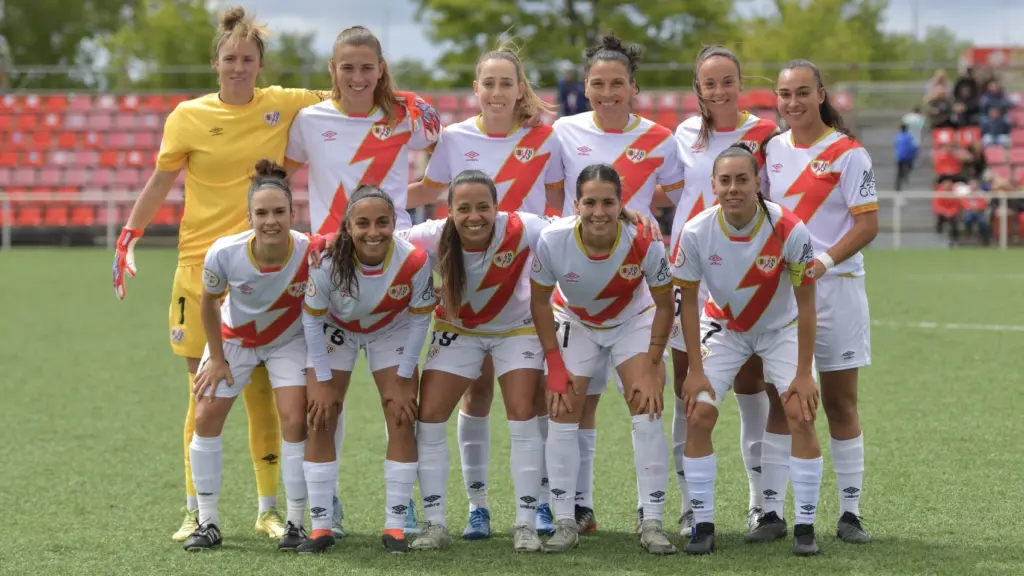
Rayo Vallecano's story is one of the clearest examples of how neglect can bring down a historic women's football team. In 2026, the club's decline reached a new low as Rayo's women's side were relegated to Tercera RFEF, the fourth tier of Spanish women's football.
The contrast with the men's team could hardly have been greater. While Rayo's men celebrated a historic run to the Conference League semi-finals, reaching the last four of a European competition for the first time, the women's team continued their dramatic fall through the divisions.
Rayo Vallecano's decline began in 2022, when they were relegated from the top flight to the second tier. Before then, the Madrid club had been one of the historic names in Spanish women's football. They spent 19 seasons in the top division and competed in the Champions League in three different campaigns.
Rayo have three league titles and a Copa de la Reina to their name and were among the pioneering clubs of women's football in Spain.
Yet their situation continued to deteriorate. In 2023, Rayo suffered a second consecutive relegation. After spending a season in Segunda RFEF, the third tier of Spanish women's football, they were relegated again in 2025/26.
It meant three relegations in just four years for a club that once competed in the Champions League and whose former players include some of the biggest names in Spanish football, such as Jenni Hermoso and current Spain coach Sonia Bermúdez. A club that once belonged among the country's elite now finds itself fighting to avoid disappearing from the upper levels of the women's game altogether.
The poor results on the pitch and years of neglect off it point towards a turning point in the club's recent history: the arrival of president Martín Presa.
Protests and fundraisings
Presa took control of Rayo Vallecano in 2011. Three years later, the women's team was removed from the club's budget, prompting players and supporters to protest publicly and launch symbolic fundraising campaigns in an effort to keep the team going.
The problems continued in the years that followed. In the 2020/21 season, when Spain's first collective bargaining agreement for women's football came into effect, Rayo had their opening three league matches postponed after the players had been unable to complete a proper pre-season during the summer.
Months later, with the season already underway, players publicly complained about unpaid wages and the conditions they faced on a daily basis. Among the issues highlighted was the food provided by the club, with players reportedly being given sandwiches after a match.
Over the years, a series of incidents have further exposed the problems surrounding Rayo's women's team.During the 2021/22 season, one of their players collapsed on the pitch after suffering a head injury. With Rayo having no team doctor present, medical staff from the opposition had to come to her aid.
The club defended the situation by pointing out that, under the federation's regulations at the time, they were not required to have a doctor assigned to the team. Just a week later, a similar situation occurred during a match against Barcelona. The appointment of Carlos Santiso as head coach brought further controversy.
Story for the book. And no happy ending
A leaked WhatsApp voice message emerged in which Santiso was heard telling members of his coaching staff that they should "do an Arandina" — an apparent reference to the high-profile sexual assault case involving former players of Arandina CF and a minor. The recording sparked widespread criticism and added another deeply troubling episode to the club's recent history.
Rayo Vallecano's decline is a story that could fill an entire book. Behind the results and relegations are the experiences of players who lived through circumstances that statistics and league tables alone cannot capture.
More broadly, Rayo's story serves as a stark example of what can happen when a historic club fails to properly support its women's section. A team that once won league titles, lifted the Copa de la Reina and competed in the Champions League has now suffered three relegations in four years. The fall could hardly be more dramatic.