

Why is North Korea so dominant in women’s youth football?

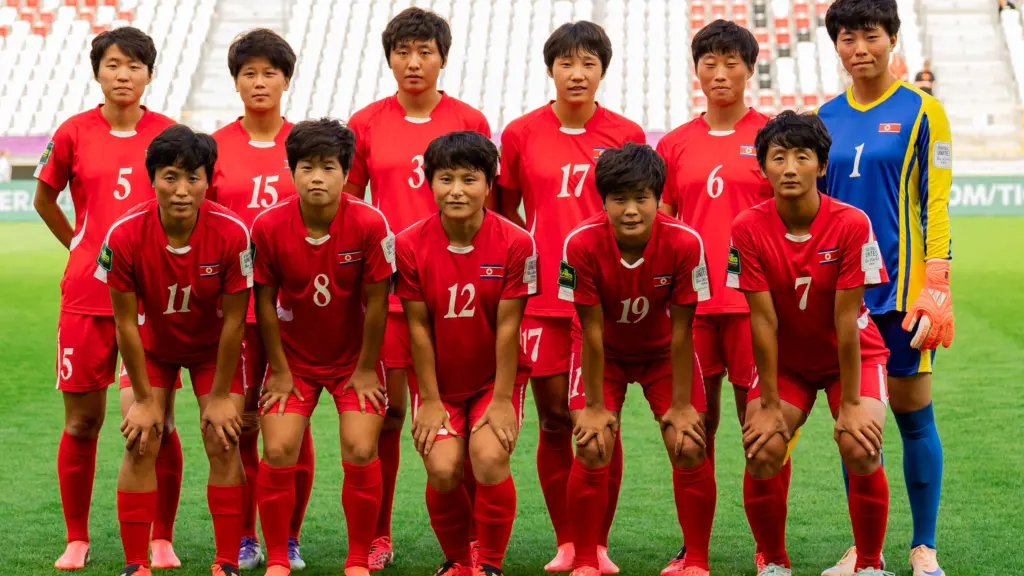
The U17 and U20 World Cups. North Korea has dominated women’s youth football in recent years, and it looks like they could be heading for yet another title in Poland. Yet this is a country ruled by one of the world's most repressive dictatorships. So how has North Korea become so successful specifically in women’s youth football?
Very little is known about life inside North Korea. It is one of the most isolated countries in the world, ruled by an authoritarian regime. Much of what we know comes from the testimonies of those who have managed to escape, and what they describe is hardly a life any of us would want to experience. It is a country of strict censorship and poverty, where people are divided according to their social status and many spend years of their working-age lives in military service.
And yet, North Korea has produced a generation of female footballers who keep bringing home trophies from U17 and U20 tournaments.
How is that possible?
“Women’s football is a very promising sport in our country and the government is focusing heavily on its development. We know this gives us an advantage because many countries do not receive the same level of support,” Ri Song-ho, head coach of North Korea’s U20 women’s national team, told Spanish newspaper Marca.
When sport becomes soft power in politics
Sport has always been a form of soft power, used by democratic and non-democratic countries alike. It would be naive to pretend that sport and politics exist separately. They have always been intertwined. It's nothing unusuall when president or PM meet the Olympics medailist or another successfull athlete after the tournament.
Think of Lithuania’s basketball team at the 1992 Barcelona Olympics, or Czechoslovakia facing the Soviet Union in ice hockey after the Warsaw Pact invasion of Czechoslovakia in August 1968.
Sport can also serve as a powerful propaganda tool, something authoritarian regimes have historically understood very well.
For the North Korean regime, sport is not simply sport. International success is also an opportunity to demonstrate the country's capabilities to the outside world and strengthen the image of the state at home. Thanks to its long-standing international success, women’s football is particularly well suited to that purpose.
North Korea has also recognised the opportunities offered by women’s football, a relatively young and rapidly growing sport in which investment and development remain uneven across the world.
A system built to win
North Korea’s success in women’s football is not accidental. Football is hugely popular in the country, while the development of young female players has become highly structured.
The contrast between North Korea’s recent youth and senior results is particularly striking. While its U17 and U20 teams have become dominant forces at international tournaments, the senior side has not enjoyed the same level of success in recent years.
Historically, however, North Korea has been a major force in Asian women’s football, winning the AFC Women’s Asian Cup three times (last success was in 2008, so more than 16 years ago). More recently, the senior team was eliminated by Australia in the quarter-finals of the Asian Cup in March before securing qualification for next year’s World Cup in Brazil through the play-offs.
At youth level, though, North Korea has developed a system capable of producing players who are ready to compete for international titles remarkably early.
Unlike many European youth systems, where enjoyment, participation and developing a long-term relationship with the sport are important parts of childhood development, North Korea operates a strict, systematic and highly professionalised training regime.
The result is players who are exposed to intense discipline, physical preparation and technical development from a very young age. In some cases from around 13 years old.
From schools to the national team
Young girls are scouted through schools before the most promising talents are developed through institutions such as the Pyongyang International Football School, where potential future internationals are trained. The school was founded in 2013.
The school combines education with specialised football development and is part of a wider system designed to identify talent early and prepare players for elite competition.
North Korea’s recent results, therefore, are not simply a remarkable coincidence. They are the product of a highly organised system shaped by the country's wider political and social structure, strict discipline and ideological motivation.
And when players are prepared to compete at such an intense level from an early age, North Korea can arrive at youth tournaments with teams that are already tactically, physically and mentally extremely mature.
What happens after the youth tournaments?
That raises another question: what happens to these players afterwards?
North Korean players may leave youth World Cups as champions, but the players they defeat from countries such as England, Spain, the United States or Brazil are far more likely to build careers in the world’s most prestigious domestic leagues like WSL or NWSL.
International sanctions and the restrictions surrounding North Korean citizens make the traditional pathway towards a professional career abroad considerably more complicated for North Korean footballers.
That creates a curious contrast. At 17 or 20, a North Korean player can be among the best young footballers in the world. A few years later, many of the opponents she defeated may be playing for some of Europe’s biggest clubs while her own career remains largely invisible to the outside world.
North Korea’s dominance of women’s youth football is therefore attracting attention far beyond the usual audience of the women’s game. But these results have not appeared overnight. They are the consequence of a long-term system that, in many ways, reflects the country in which it was created.
It makes North Korea’s dominance of women’s youth football a fascinating phenomenon but also a deeply unsettling one.