
Women’s football stars call for change as U20 Women's World Cup scheduling leaves players behind

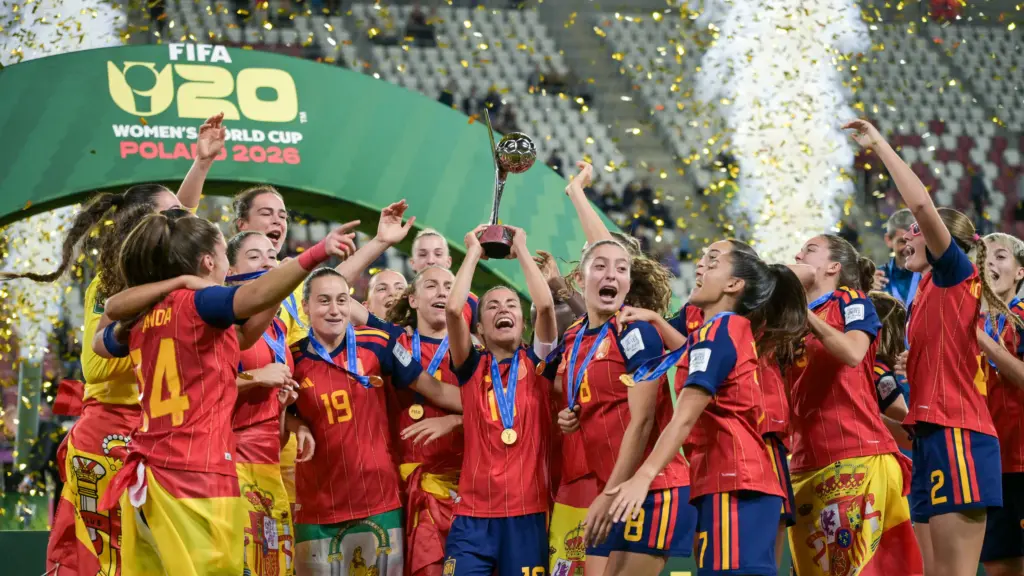
This year’s FIFA U20 Women’s World Cup is being played outside a protected international window, leaving some clubs free to keep their young players at home. A group of leading current and former stars is now calling on FIFA to make sure it does not happen again.
Bay FC midfielder Claire Hutton knows exactly what this tournament can mean. In 2024, she helped the United States women's team win bronze, became one of the team’s standout players and has since broken into the senior national team.
This time, though, she was not in Poland. Hutton was one of several high-profile US players still eligible for the tournament who remained with their clubs. Lily Yohannes and Jordyn Bugg were among the other notable absentees.
The problem is the calendar. The U20 World Cup runs from 5 to 27 September, outside a protected FIFA international window, meaning clubs are not obliged to release players.
For NWSL teams, the timing is particularly awkward. September comes late in the regular season, with play-off places still on the line and clubs facing the prospect of losing key players for several weeks.
In Europe, the issue is different but no less real. The tournament overlaps with the opening weeks of the domestic season, meaning players who do travel can miss crucial early matches and valuable time settling into a new campaign.
Selection is not only about football
The issue became prominent enough during the tournament for some of the biggest names in the women’s game to intervene.
Alex Morgan, Marta, Crystal Dunn, Lindsey Heaps and others signed an open letter to FIFA, calling for future U20 World Cups to be played within the official international calendar.
Hutton is one of the signatories. Alex Pfeiffer also signed after publicly saying she had missed out on the chance to represent her country at a World Cup because the tournament falls outside a protected window.
Kennedy Fuller, captain of the US team in Poland, added her name too. Bay FC released her for the tournament, showing how much currently depends on the decision of each individual club.
That is the weakness at the heart of the system. A place at a World Cup can depend not only on form and selection, but on whether a club is willing to let a player go.
The game has moved faster than the calendar
The issue is becoming more pressing because the best young players are entering the professional game earlier than ever. By 19 or 20, they may already be central to their club’s plans. Yet those same years represent the final chance to play at U20 level on the world stage.
Many of the players backing the letter know how important that experience can be. Morgan won the tournament with the US in 2008, while Dunn and Julie Ertz lifted the trophy four years later.
For future internationals, the U20 World Cup can be a first taste of a long tournament, knockout football and the pressure that comes with representing a country on the world stage.
The signatories want to make sure the next generation is not denied that opportunity because of where the tournament happens to sit in the calendar.Clubs have not publicly come out against the proposal, but their decisions not to release certain players underline the other side of the argument.
North Carolina Courage, which kept England midfielder Erica Meg Parkinson with the club, pointed to injuries and squad demands. Seattle Reign head coach Laura Harvey also spoke about the difficulty of losing important players at a decisive stage of the season.
That leaves FIFA with the wider problem to solve. As women’s football becomes more professional, the gap between club commitments and youth international football is only becoming harder to ignore.
In This Story
The players this piece is about.