A football powerhouse, but only for men? The story of Argentine women’s football
For several decades now, football has been one of the most important elements of Argentine society. Iconic players such as Messi and Maradona are treated like demigods, Argentine children wear football jerseys as part of their everyday attire, and when the national team plays, life across the whole country practically comes to a standstill.
However, this almost sacred relationship with football has one major catch. It primarily applies to men and men’s football, whilst women’s football, despite gradual progress, has long remained on the fringes of public interest.
Until relatively recently, women in Argentina were viewed in the context of football solely as devoted supporters or as mothers, girlfriends and wives whose role was to support their sons, partners and husbands in the sport. The idea of women as players, coaches, members of the coaching staff and football media professionals was taboo for a very long time, and although times are changing, this is unfortunately still partly true today: “It’s not that we can’t be head coaches, physiotherapists, nutritionists or fitness coaches. It’s simply that we don’t have the opportunity. They don’t open the doors for us to join the clubs. If a woman and a man apply for the same position, they always choose the man,” stated Macarena Sánchez, a footballer and campaigner for better conditions for female players, back in 2019.
Whilst the men have lifted the World Cup trophy three times, the Argentine women have failed to progress beyond the group stage on each of their four appearances at the tournament and are still waiting for their first-ever victory at the World Cup. Why is that?
Unlike in neighbouring Brazil, women’s football was never banned by law in Argentina, though this does not mean it was socially accepted. Girls were tended to be steered towards sports perceived as feminine, such as gymnastics or dance, and even this support usually lasted only until they reached adulthood. After that, their role was supposed to be clear: to look after the home and children, and to become the backdrop to their husband’s life.
Once Upon a Time in Buenos Aires
The first documented women’s football match took place as early as 1923 in Buenos Aires, when a battle between Argentinas and Cosmopolitas was attended by six thousand curious spectators. Despite the undeniable public interest that such matches generated even in the following decades, women’s football continued to develop exclusively on an unofficial basis and solely at an amateur level. Nevertheless, in the 1970s, Argentine female footballers finally took part in what is now a historic unofficial World Cup, where they made their mark on history primarily through a victory over England, in which Elba Selva scored no fewer than four goals.
It was at this time that efforts began to establish the first organised competitions. Although these initiatives were not always successful, they laid the groundwork for the formation of the independent Argentine Association of Women’s Football, which was even officially taken under the patronage of Diego Maradona’s mother, Dalma Salvadora Franco.
From the very beginning, the association fought to ensure that Argentine women’s football would, if not become professional, at least have a clear structure. From organising tournaments, it thus took a step to bring stability to the sport: the establishment of an official league.
A league is born
The league kicked off its inaugural season in 1991. A total of eight teams took part in the opening campaign, though the number of participants was not entirely stable. In the years that followed, it became clear just how much the league was affected by a lack of funding and poor (or even non-existent) facilities. Some clubs were therefore forced to withdraw from the competition, even during the course of a season, which made the legitimacy of the competition highly questionable.
However, the efforts to shape the identity of Argentine women’s football were at least evident in the national team, which enjoyed its heyday in the 1990s and at the start of the new millennium, competing for the top spots in the Copa América Femenina on several occasions. It must be added, however, that this is purely a competition between South American teams, which at that time were nowhere near the standard of the USA or the European powerhouses.
In 2003, the Argentines also qualified for the World Cup for the first time, a milestone they have since achieved on three further occasions (2007, 2019, 2023). That said, as already mentioned, neither of La Albiceleste’s appearances saw them progress beyond the group stage, and their successes have thus far been limited to the regional level.
The professional league. Or not?
The era that began in 2015 can only be described as a period of turbulent change, in both a positive and a negative sense. A second-tier league was established, some matches were broadcast on television, and general media interest also showed an upward trend. In terms of the players’ conditions, however, not much had changed. Professional contracts and proper facilities were a distant dream for most players, so they usually had to hold down other jobs alongside football.
It wasn’t until the 2019/20 season that a breakthrough came, when Argentina became only the second South American country after Colombia to officially professionalise its top-flight women’s league. Well, almost. Or perhaps not at all: every club was required to have eight players on professional contracts, but the rest of the squad could remain amateur. Rather than genuine professionalisation, this was an attempt to silence, at least for a while, the increasingly vocal complaints of dissatisfied players.
Today, the situation is somewhat more optimistic, though not by much. The minimum number of players on professional contracts per club has risen to fifteen, but even so, up to forty per cent of the players in the top division are amateurs. Nor is the minimum gross wage particularly encouraging, as it does not even reach the level of Argentina’s statutory minimum wage. Even in the case of official ‘professionals’, it is therefore still open to debate whether they are operating under a truly professional or rather a semi-professional system.
The Struggle for Dignity
Although it is frustrating, the development of the Argentine league scene is not all that different from the history of the leagues in many other countries. Much more controversy has been caused by the situation surrounding the national team, which can only be described as scandalous. Following the Pan American Games in 2015, the national team’s activities were suspended for a full two years: no national team training camps, no matches, no tournaments. Nothing. The women’s national team eventually resumed training in 2017, but under conditions that most players considered utterly undignified.
After repeated attempts to resolve these issues with the football association through peaceful means, the players decided to go on strike. Yet their demands could hardly be described as excessive. They simply wanted slightly higher financial allowances, decent accommodation, better travel arrangements, better-equipped changing rooms and the opportunity to train on natural grass. A photograph of the starting eleven taken during the 2018 Copa América became a symbol of the protest: the players are seen making the ‘hand-behind-the-ear’ gesture, pleading to be heard.
Partly as a result of media pressure, the conditions for the women’s international players then began to improve gradually, although the current situation is still far from ideal and the relationship between the players and the football association remains strained. This is, in fact, confirmed by the scandal in 2024, when as many as four international players refused to attend a national team training camp in order to draw attention to the intolerable conditions. It emerged from their statements that even the most basic matters were problematic. For example, the players did not have access to suitable meals during national team camps, they did not receive financial allowances, and the players’ family members were not provided with free tickets but had to pay for them out of their own pockets.
“One reason (or the strike) is a situation I haven’t had to deal with since I was 14, when I was part of the Under-17s: not being provided with breakfast or lunch during the training camps. The usual response? There’s no money,” said Lorena Benítez, a striking member of the national team, outlining the situation at the time. It will be interesting to see in what frame of mind Argentina will travel to the 2027 World Cup and what further scandals may come to light in the meantime.
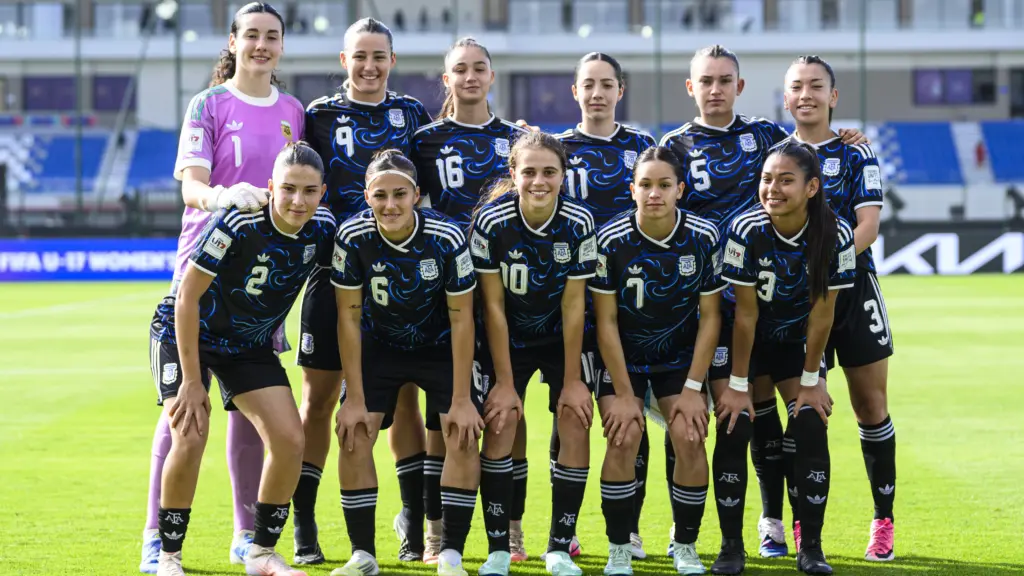
However, so as not to end on too gloomy a note, a look to the future offers fans of Argentine women’s football plenty of reasons for optimism. The up-and-coming generation suggests that women’s football could gradually carve out a place for itself in the hearts of Argentine fans. In recent years, the U17 and U20 national youth teams have begun to make their mark in the knockout stages of world championships, and talents such as Mercedes Diz and Annika Paz are being talked about with increasing enthusiasm even beyond the country’s borders. Perhaps the time has come for Argentina to realise that its footballing religion does not have to be exclusively male.
More Videos & Highlights
Watch the moments behind the story.
 2 min read QB Originals Exclusive: Franny Černá on growing up in the USA, representing Czechia and how mainstream media treat women’s football
 1 min read QB Originals LISAN ALKEMADE: PSV Eindhoven Goalkeeper on How Mainstream Media Treat Women's Football Goalkeepers
 1 min read QB Originals QB Break with Franny Černá | Coffee, Football & Life in Prague
 1 min read QB Originals “We Celebrated Like We Won the World Cup” - Klára Cahynová on Beating Barcelona
 4 min read Off The Pitch Focus on the pitch, relax in the paddock: These footballers are F1 enthusiasts
 4 min read Strong Story No longer a choice: Motherhood in modern women’s football
 2 min read QB Originals BARBORA VOTÍKOVÁ: First Czech Woman at Arsenal. On & Off the Pitch
 1 min read QB Originals First Game. New Country. Hattrick. Hallie Bergford Story
 1 min read The Best Actions NWSL expansion sides suffer defeats in season debuts
 1 min read QB Originals SUE SMITH: A True Pioneer of the Women’s Game
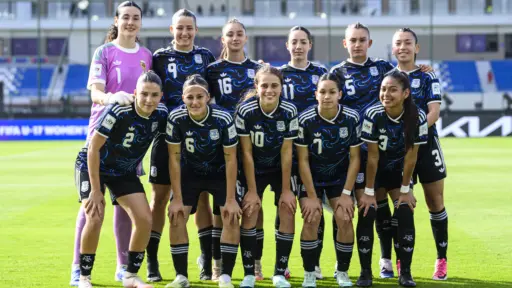 A football powerhouse, but only for men? The story of Argentine women’s football
 Bicycle kick in 100th minute and impressive run. Venezuela U17 return to world stage amid difficult conditions
 Liverpool's Zara Shaw has lost enough time. But two ACLs in two years can't stop her
 New Caledonia make history as U20 women reach world stage amid turbulent conditions
 The fairytale of how a small girl from Canada, Olivia Smith, conquered England. Now she wants the Ballon d’Or
 TV rights as an annual drama in women's football. Liga F once again resolved the issue at the last minute
 Carolina Morace: The first lady of Italian football who never waited for a permission
 The downfall of Rayo Vallecano: from the Champions League to three relegations in four years
Explore more from The Pulse
Keep discovering more stories from women's football.