
Why McCabe and Kerr's departure is good news for women's football

The final week of the WSL broke the hearts of many fans. Everyone has a player who made them fall in love with football and with whom they primarily identify their club loyalty. For some, that was Katie McCabe, who spent 11 years at Arsenal. Women’s football in England boasts a relatively young fan base, which grew significantly after the successful Euro 2022, meaning many Arsenal fans never knew the club without McCabe.
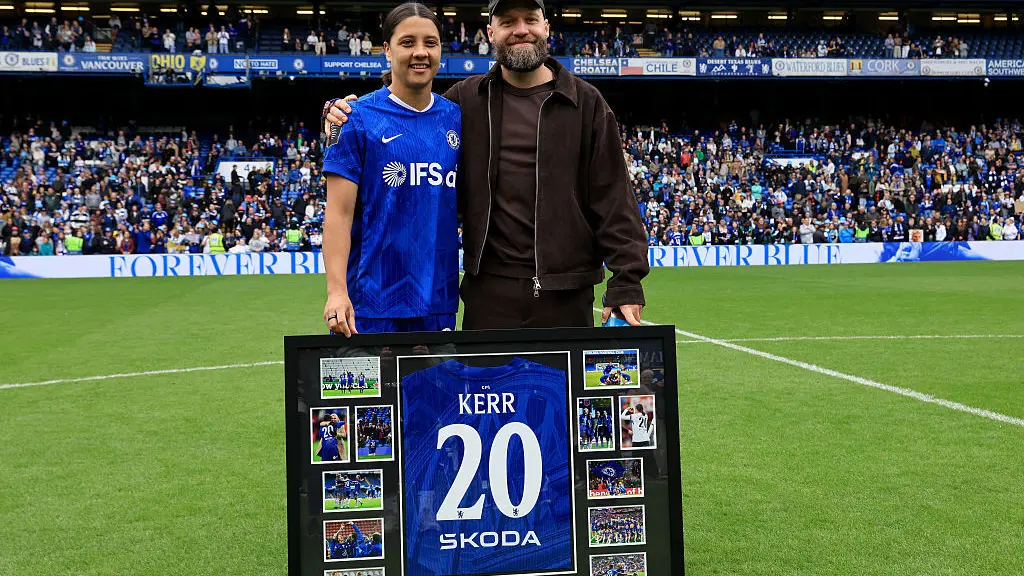
Same Sam Kerr. Despite being injured for almost two seasons, she is Chelsea’s all-time top scorer, having recently broken Fran Kirby’s record. Kerr spent six seasons with the Blues and became one of the club’s icons. Her departure also saddened many fans.
Departures are painful, but they are part of football. From a global perspective, however, this is something to celebrate. It means that women's football grew to another level. The constant breaking of player transfer records, the increasing financial investment in the women’s game, and the ability for even the top players, including McCabe and Kerr, to choose among elite clubs all signal growth.
To understand this, let’s go back a few years, when women’s football, at least in England, Germany, or the USA for example, did not receive the attention it enjoys today. The American NWSL was recently founded, and in Europe only a few clubs took their women’s teams seriously.
The best players therefore had limited options, as only a few clubs could provide the necessary infrastructure. In the early stages of women’s football professionalization, elite players were often grateful just to have professional facilities.
Among the first clubs to take women’s football seriously were Arsenal and Chelsea. It is no coincidence that these clubs produced some of the biggest global icons in women’s football. At Arsenal, the first ones who come to your mind is club legend Leah Williamson, following Katie McCabe, and Beth Mead. At Chelsea, there is Sam Kerr and captain Millie Bright, who bid farewell not only to Chelsea but also to her career.
All these names share a strong loyalty to their clubs. Leah Williamson is an unique example. She joined Arsenal as a nine years old and has never worn another club’s jersey. This year, she celebrated two decades at the club and confirmed her loyalty by signing a new contract, saying she still hasn’t had enough. Indeed, Williamson has been a lifelong Gunners fan, and no one, including herself, can imagine her in any other jersey.
Not only England
For McCabe, Mead, and Kerr, the situation is slightly different. All had previous clubs before Arsenal and Chelsea, but they reached their peak at these London giants. Combined with the women’s football boom, this proved a goldmine for marketing departments. Jerseys with their names became top sellers, so as did match scarves with their faces on it. The ever-growing fan base even began creating chants in their honor, helping to build a club fan culture in women’s football.
Times are changing. Today, Chelsea and Arsenal are no longer the only clubs where players can have long, successful careers. Clubs capable of success and trophy challenges exist across the WSL, as this season has shown with Brighton, and outside England as well.
The market has leveled. Players are making decisions based on sporting ambition, financial reward, and personal challenges rather than sentiment. Although leaving a club to which you feel a strong emotional attachment and which has shaped you as a person and player is always difficult. But this is football.
The good news is not only for individual players but also for the clubs themselves. Women’s football used to be personality-driven: people didn’t go to Chelsea because they love the club, they went to see Sam Kerr. When a star like her left, it could have been disastrous for the league. Today, it is quite the opposite.
Women’s football has grown to a stage where club brands and competitions (like the WSL) are stronger than individual names. The departures of Kerr and McCabe open space for a new generation and prove that clubs can survive and thrive without their big names. Club identity is no longer carried by one or two icons. The women’s football boom has cultivated fans of clubs as a whole, not just individual personalities.
And that is good news for women’s football. It does not change the fact that when your favorite player leaves your club, it is a moment of great sadness and disappointment. But that is part of professional sport.
In This Story
The players this piece is about.